
Combines finance, logistics, production and human resources into a single, transparent architecture.
Get a demonstration of the system Get a demonstration of the system
Optimised business processes
When the scale of a company grows,
chaos within is no longer acceptable.
Risk scenarios that hit a company's manageability
and capitalisation:

The business model has grown, but the infrastructure remains the same.

Reports are generated from different data sources – CEO/CFO loses control.

Checking/auditing/merging – “truth-seeking” between tables begins.

One weak link in the chain and production, logistics, finance stop.

Decision making is delayed because the system gives delayed or distorted data.
ERP that builds the system around the company's strategy, not the people.
Transparency. Speed. Manageability.
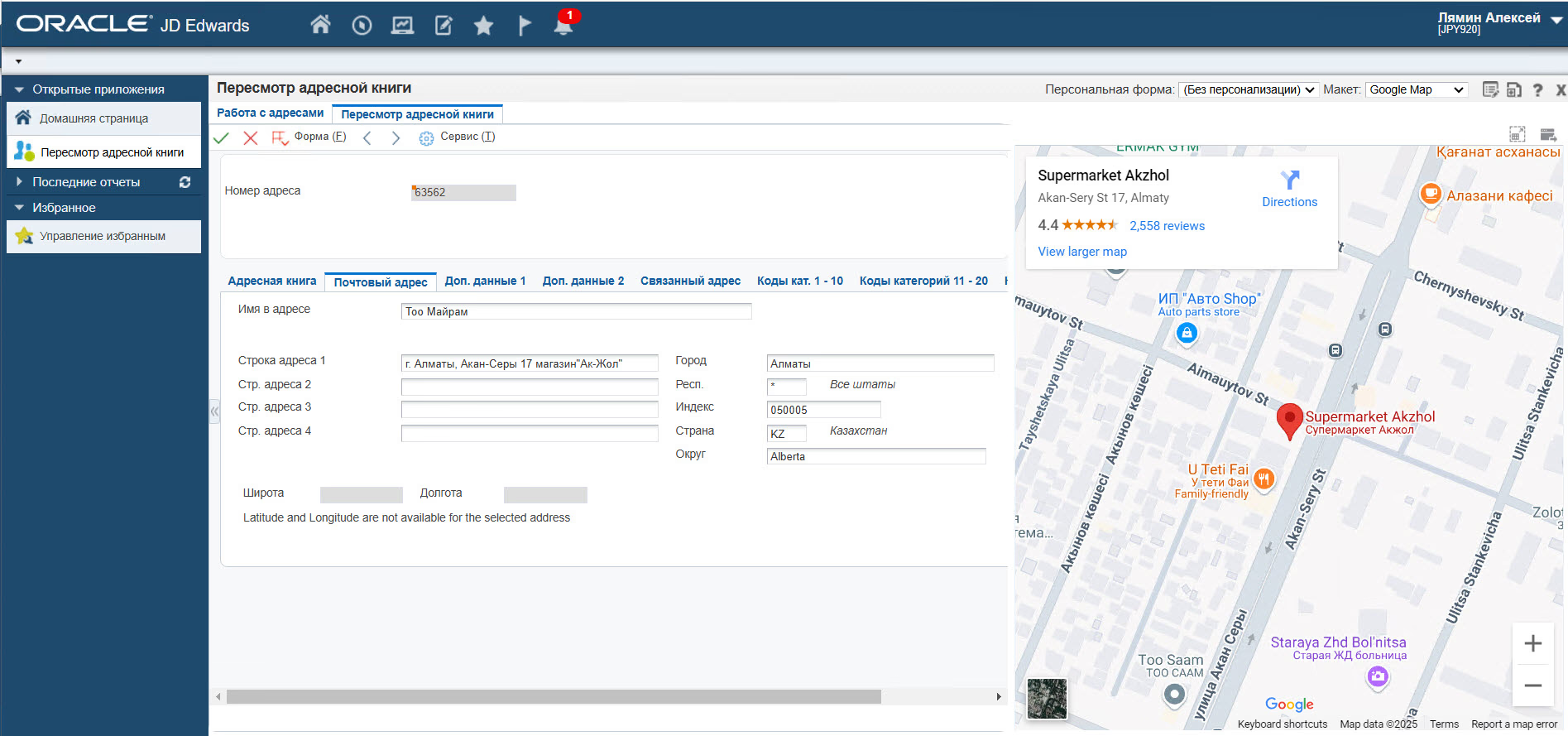
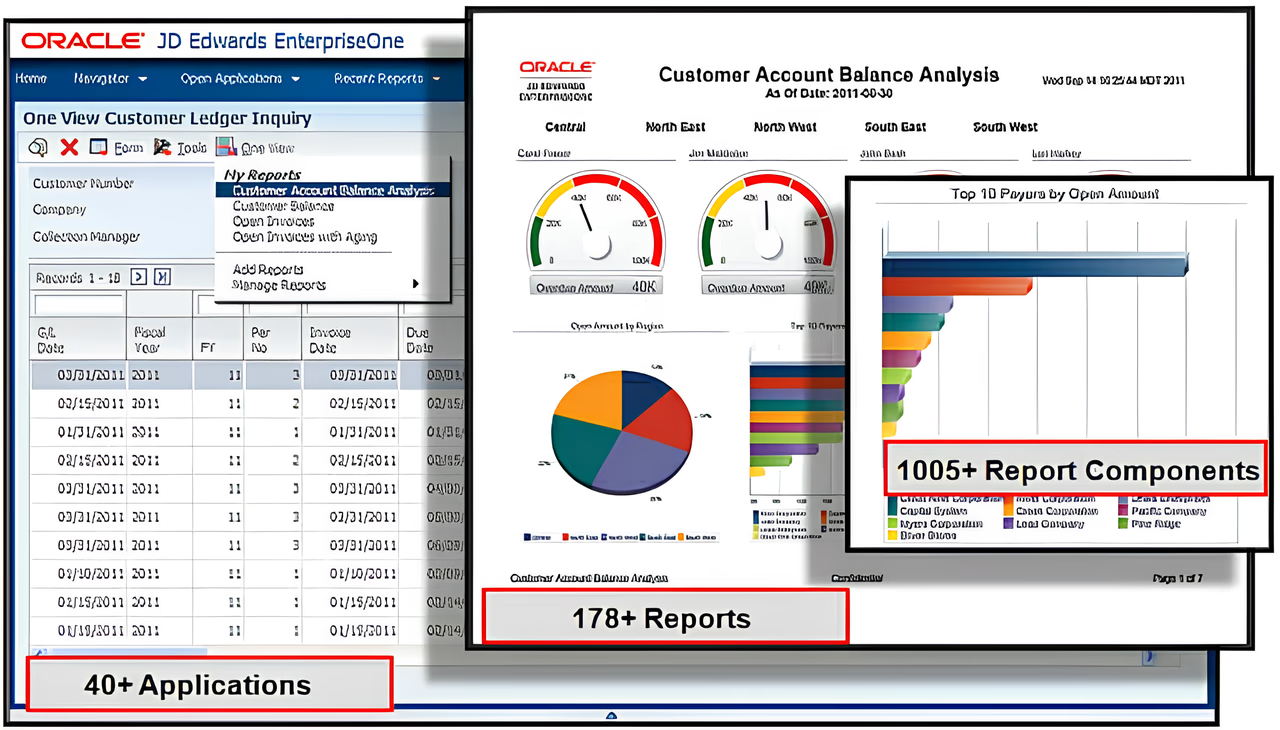
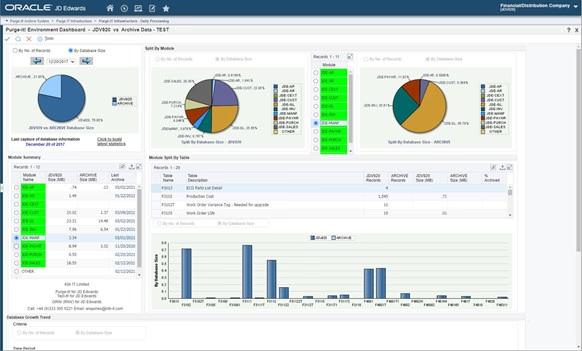
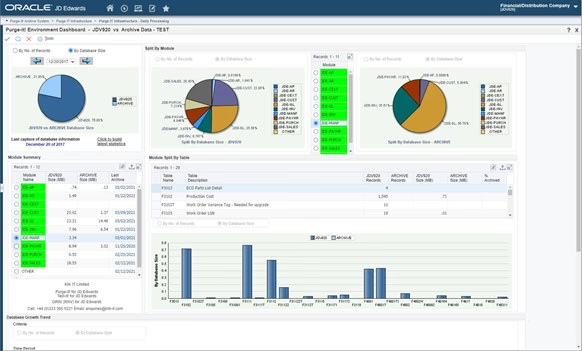
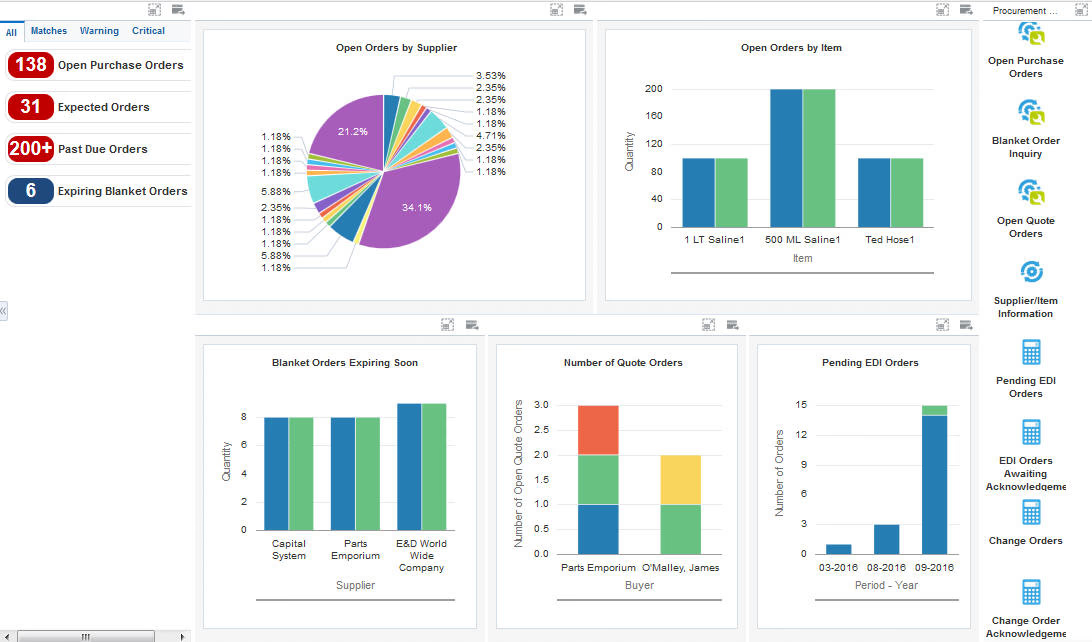
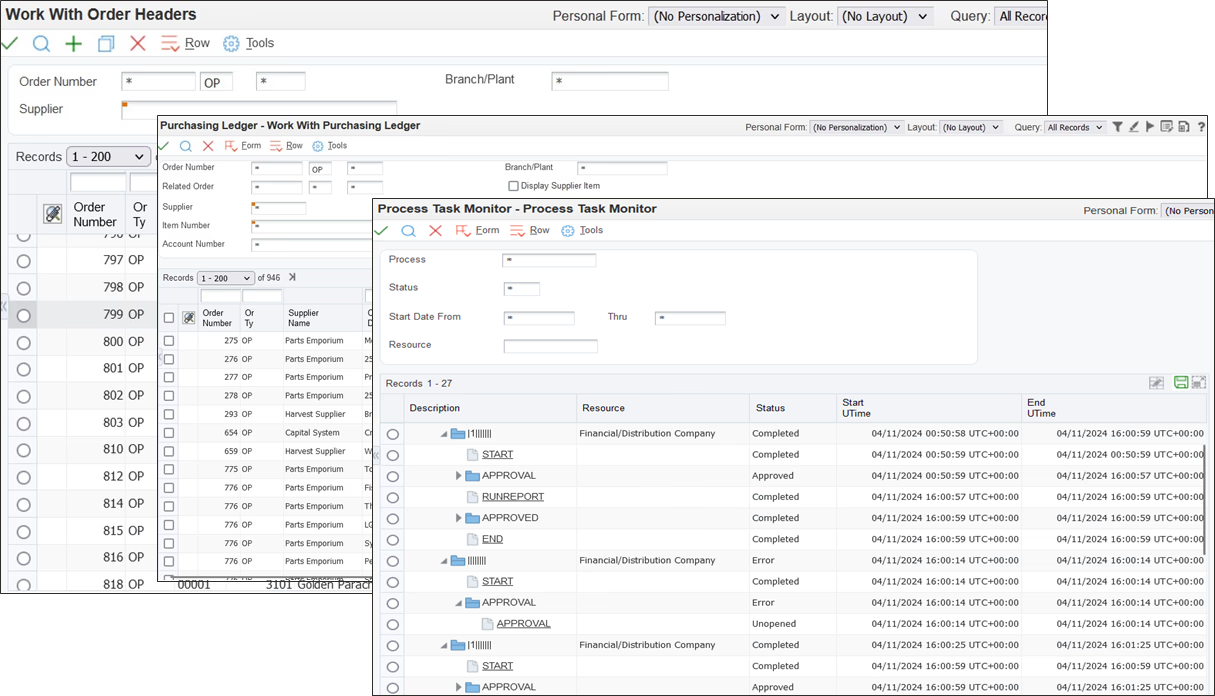
How it works: ERP architecture on the example of a group of companies.
Company with directions: import, production, warehousing, distribution.
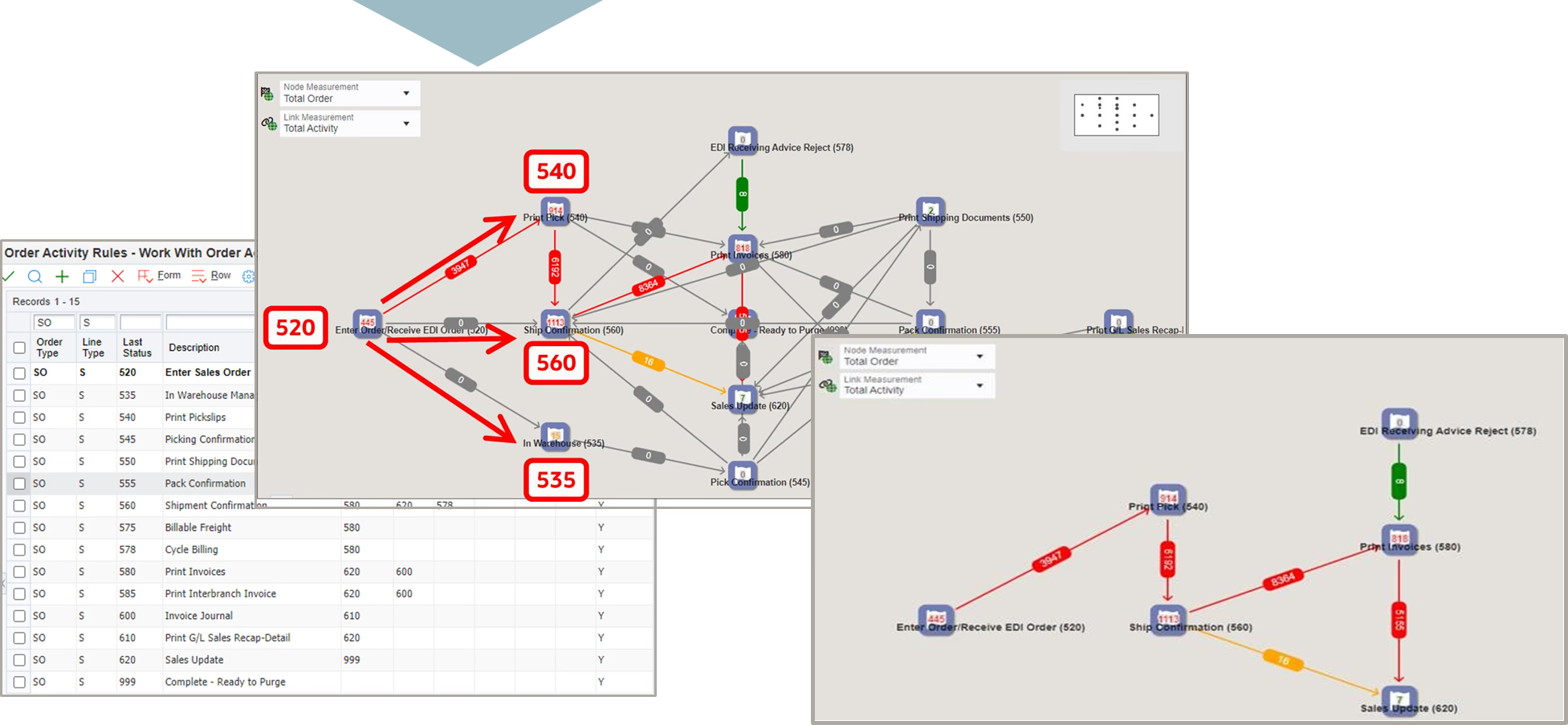
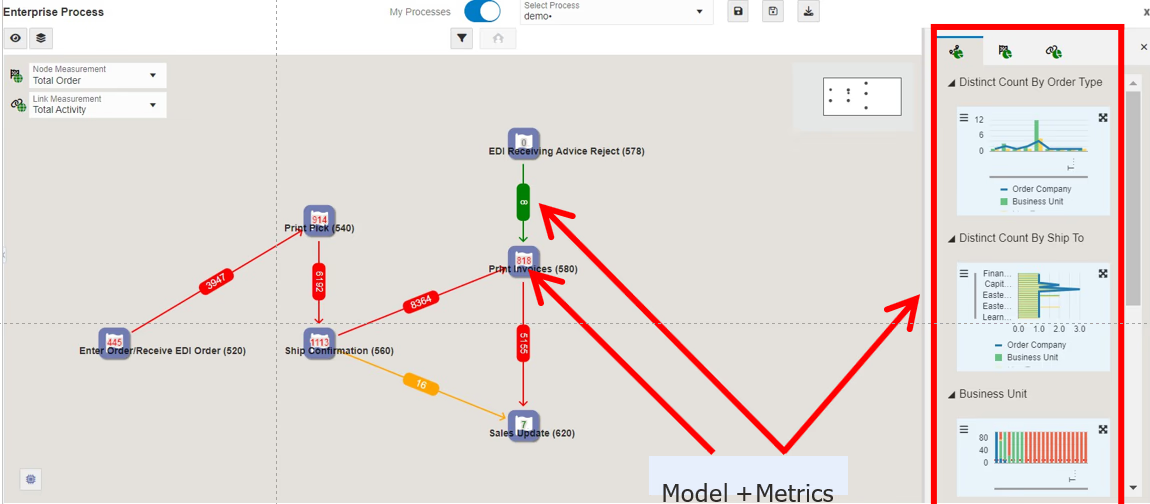
ERP as a foundation for governance
and resilience
Drivability proven in action.

Centralisation of data and business processes
A single version of the truth for the board, CEO, CFO and all key departments.
Cross-cutting cost control
Transparent profit model by business lines, legal entities, SKUs, branches, regions, promotion channels.

Scenario planning and forecasting using AI
Scenario management from operational to strategic decisions based on forecasting.

Compliance with current policies and requirements for auditing, security, ESG, GRC, etc.
Preparedness for audits, transactions, consolidations, investment rounds.

The system implements best practice processes for production, logistics, finance and personnel management.
Switching to ERP gives access to standardised end-to-end business processes that are used in the world’s leading companies.

Along with the ERP system comes a pre-integrated Data Warehouse for Analytics (DWH), over 25 industry models.
The ability to immediately receive management and financial analytics without the need to set up integrations for a long time.
FAQ
What else should you know before implementation?
Absolutely.
JDE is built to manage complex organisational architectures: holding structures,
subsidiaries, and international branches — with full support for intercompany
transactions, consolidated reporting, and cross-entity operations.
Oracle JD Edwards is modular, flexible, and designed to adapt to your processes — not the other way around. Compared to SAP or 1C, JDE delivers faster scalability in complex environments, greater transparency for executives, and a lower total cost of ownership over time — ideal for growing, multi-entity enterprises.
For enterprise-level projects, implementation typically takes 4 to 8 months depending on scale and complexity. We manage the entire process: diagnostic, rollout, onboarding, training key teams, and post-launch support — working directly with executives, finance, operations, and IT to ensure seamless adoption.

Total clients
43How much does it cost to implement?
The cost depends on the scale of the company and the level of customisation. We select the optimal solution for each business.
At your free consultation, you will receive a preliminary cost estimate and implementation plan.
Get a cost estimate Get a cost estimateCheck how it works
in your company's reality
We’ll conduct a rapid analysis of your current IT model and show you how JDE can eliminate risk, accelerate reporting and strengthen controls.